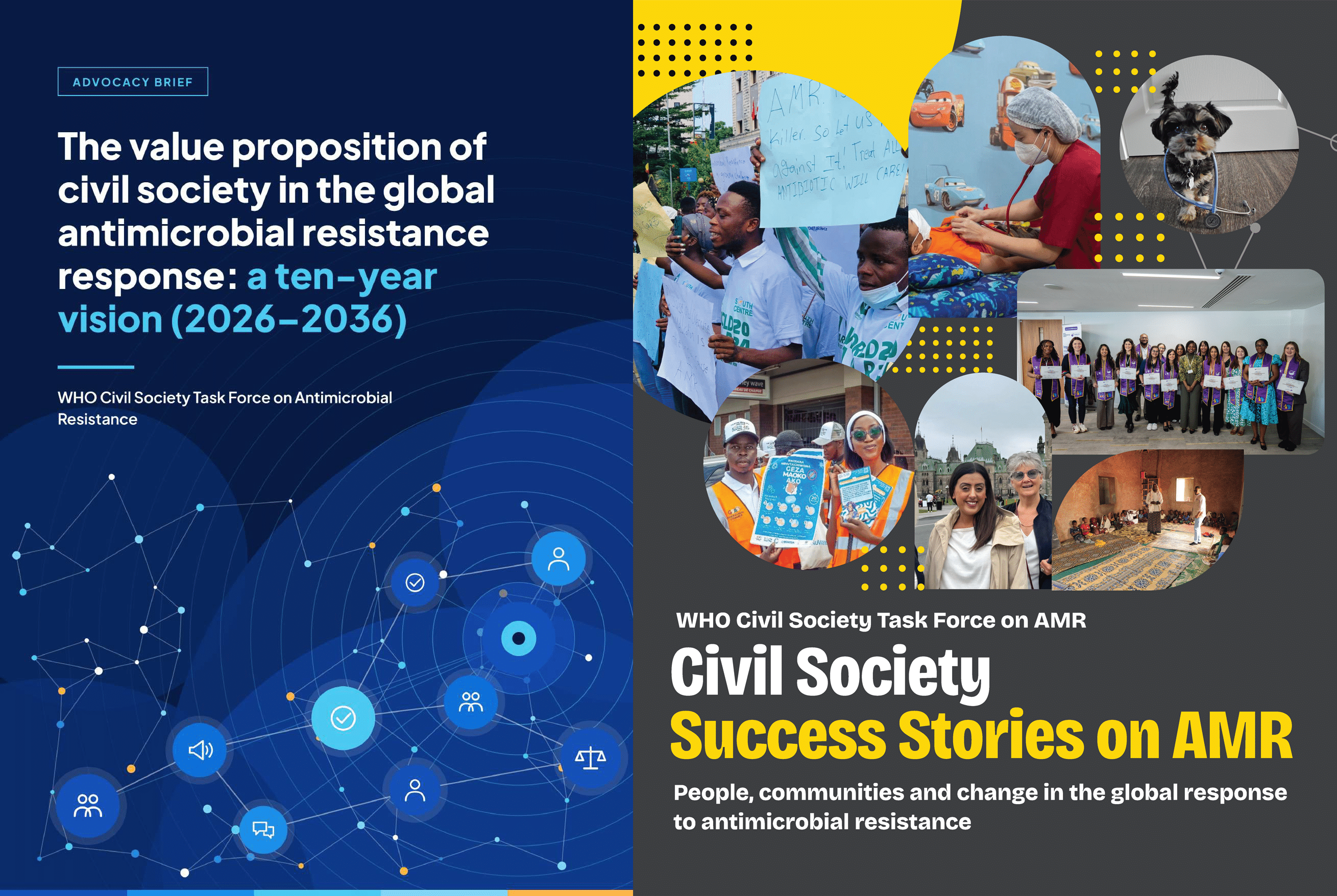
EPHA is proud to have contributed to “The value proposition of civil society in the global antimicrobial resistance response: a ten-year vision (2026–2036)”, a new advocacy brief developed by the WHO Civil Society Task Force on Antimicrobial Resistance.
The publication originated in the Task Force’s Working Group 3 on Coordinated Civil Society Engagement and Resourcing, led by EPHA Director General Dr Milka Sokolović. Initially developed with Victoria Rutter, Hamisi Msagama, and Katherine Urbaez, it grew into a collective effort involving the entire Steering Committee, the wider Task Force and civil society networks. The process was supported throughout by Dr Philip Mathew of WHO’s AMR Department, whose leadership and coordination of the Task Force secretariat were instrumental in bringing this collective work together.
The brief makes the case for what civil society brings to the AMR response that no other actor can quite replace. Beyond mobilising communities, building trust and supporting implementation, civil society plays an indispensable role in challenging political choices, exposing gaps between commitments and action, promoting equity and justice, and holding governments and institutions accountable.
Drawing on evidence and experience from across the global AMR response, the publication sets out civil society’s contributions to the six objectives of the updated Global Action Plan on AMR (2026–2036).
It also calls for a fundamental shift in how civil society is recognised and supported – from being consulted or invited to implement decisions made elsewhere, to being meaningfully involved in shaping policy, monitoring progress and ensuring accountability. Protecting civic space and providing sustainable, flexible funding are essential to making this possible.
From the case for civil society to civil society in action
The companion publication, “Civil Society Success Stories on AMR: People, communities and change in the global response to antimicrobial resistance”, brings together 34 stories collected by the WHO Civil Society Task Force on AMR.
From community mobilisation and patient advocacy to strengthening health systems, influencing policy and advancing One Health solutions, these stories demonstrate the ingenuity and impact of civil society organisations around the world – often working with very limited resources.
If the value proposition explains why civil society is indispensable to the AMR response, these stories show what that contribution looks like in practice.